


Simulation
We write our own program to make everything on the line move. Simulations are great for exploring rough concepts, cycle times, robotic reach, and ergonomics.

Complex automation projects often come with a heavy dose of uncertainty. You face tight timelines, evolving requirements, and the constant pressure of wondering if every moving part will sync perfectly when the power finally turns on.
At ATC Automation, we believe you shouldn’t have to wait until assembly to know if your system works.
Virtual Commissioning (VC) allows us to build a fully interactive digital version of your machine weeks or months before physical builds begin. Using advanced VR and AR technologies, we give customers the ability to experience, test, and refine their systems in an immersive virtual environment.
It’s more than just a standard simulation; it’s a digital rehearsal that tests real control logic, giving your team clarity, confidence, and valuable time back in the process.
Traditional automation delivery often means customers don’t see their machine in action until the Factory Acceptance Test (FAT), late in the project. If misunderstandings in sequence or operation surface then, changes are expensive, disruptive, and painful.
VC changes that timeline. By blending your mechanical CAD with our PLC controls logic and robotic software, we create a digital environment that behaves just like the real machine.
This allows engineers, operators, and leadership to watch it move, test sequence flows, and rehearse recovery steps early in the design phase. It’s a “digital handshake” that ensures our teams are aligned on exactly how the equipment will perform long before it is built.
There are several types of VC approaches we employ, each tailored to the project’s needs:

We write our own program to make everything on the line move. Simulations are great for exploring rough concepts, cycle times, robotic reach, and ergonomics.
In this approach, a PLC program controls the system. It mirrors real-world operation, with strict adherence to programmed logic, timing sequences, safety checks, and sensor feedback. It’s a true test of how the equipment will behave in production.
The system is controlled by an external program (such as a PLC), but the digital model only mirrors its behavior. This is typically used for visualization, performance tracking, and data collection.
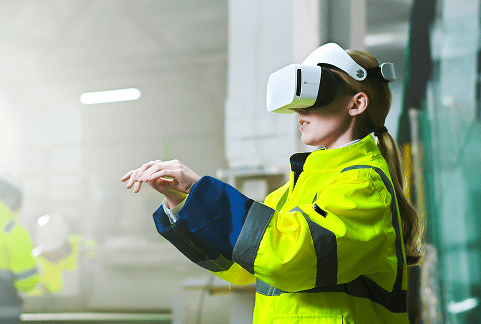
This takes one of the three methods above, most often a simulation, and brings it into VR or AR. It allows teams to view and interact with the system in an immersive environment, whether at our facility or yours, enhancing collaboration and design confidence.

You might see other integrators list Virtual Commissioning as an expensive, optional line item, sometimes costing upward of $1 million for large lines.
At ATC, we do not charge extra for our standard Virtual Commissioning process.
Why? Because we believe it’s fundamental to delivering a successful project. We use it internally to keep our own teams on time, on budget, and to prevent costly late-stage mistakes. We invest in this effort upfront because it ensures we can deliver the reliable, optimized system we promised you, without the late-project stress.
While vital for reducing technical risk, VC also transforms the project delivery experience, replacing uncertainty with confidence for your entire team.
Every project has those nagging questions:
VC lets us answer those questions definitively. Using VR technology, we bring these scenarios to life early in the process, allowing your team to visualize the setup and confirm that everything works as intended before anything is built.
All debugging takes place at our facility. During the process, we aren’t just watching animations; we are running your machine in auto and deliberately causing faults to test recovery logic. Finding and fixing these issues in a virtual environment is significantly faster than debugging them on the physical machine.
In fact, our experience shows that one hour of debug time at a desk can save between three to five hours of debug time on the actual system. This keeps your project on schedule and reduces stress during the final delivery phases.
Instead of exchanging spreadsheets or static documents, we share videos and visualizations of your system in action. These visualizations, whether of finished simulations or in-progress emulations, show your line running in auto, often by station. Each visualization provided gives customers an opportunity to validate progress, provide feedback, or request adjustments long before FAT. This transparency helps confirm milestones, reduces surprises, and allows you to influence the outcome earlier, turning what used to be late-stage changes into proactive collaboration.
By the time we reach your Factory Acceptance Test, you will have already seen the system run. You’ll know the sequence works. This turns FAT from a high-stress debugging session into a confident verification of what you already know to be true.
VC is a powerful tool for de-risking software and sequence behavior. By importing CAD and connecting to the PLC, we can evaluate behavior, recovery, and risk before the physical build.
However, it is not a complete replacement for mechanical engineering. The virtual environment does not capture real-world machining tolerances or the physical stack-ups that only appear once the machine is assembled.
While it doesn’t replace that physical validation, this process has a significant impact on identifying and resolving software and sequence issues well before the physical build begins. This allows your team and ours to focus entirely on the physical fine-tuning during installation, rather than troubleshooting basic code errors.

You don’t need to have every detail figured out to start a conversation. If you are facing a complex automation challenge and want the confidence that comes with seeing your solution before it’s built, we are ready to help.
